LankaEVPlus
Confident and Continuous Electric Mobility
Sri Lanka's trusted EV charging coordination platform — discover a charger, verify it, pay, charge and settle with confidence. Built and shipped by Apeakstrategy, live on Android and iOS today.
Not an app — a trusted coordination ecosystem.
EV drivers need to find, access, pay for and complete charging sessions through fragmented infrastructure and an uncertain digital process. The goal was to transform charging from an uncertain hardware interaction into a predictable, transparent and digitally managed service journey — for private EV owners across public and semi-public charging locations in Sri Lanka.
The Team Controls
Mobile application design
User and operator experience
LankaEvPlus backend
Wallet and payment orchestration
Pricing logic, where commercially permitted
Admin and super-admin functionality
Notifications, reports and support workflows
Integration adapters
The Team Cannot Directly Control
Charger firmware behaviour
EV battery-management behaviour
Central System availability
PayHere processing availability
Mobile-network coverage
Power-grid interruptions
Vendor-specific interpretation of OCPP
Major Constraints
Trust compounds — in both directions.
Fragmented station information, uncertain availability, incompatible connectors, separate payment processes and unclear charger responses prevent drivers from completing the charging journey confidently — resulting in wasted travel, payment anxiety, abandoned attempts and reduced trust in public charging infrastructure.
Reinforcing Negative Loop
Unreliable charger information
Failed or uncertain charging attempts
Lower user trust
Reduced platform usage
Less operational feedback and revenue
Lower investment in reliability
Balancing Loop — What LankaEvPlus Builds
Real-time state visibility
Fewer unnecessary journeys
Fewer failed sessions
Higher trust and utilization
More operational data
Better maintenance and planning
Higher charger availability
Soft Systems — Whose Problem Is It?
EV driver
“Charging is uncertain and difficult.”
Charging operator
“Chargers are difficult to monitor and monetize.”
Site owner
“Chargers may create congestion or operational burden.”
Support team
“Failures are difficult to diagnose remotely.”
Finance team
“Payments and sessions may not reconcile.”
Charger vendor
“Integration must follow supported interfaces.”
PayHere
“Payment requests must follow gateway rules.”
Regulator
“Consumer funds and data must be protected.”
Value for the operator, never at the driver's expense.
The EV driver directly experiences the charging journey; the LankaEvPlus operator funds and runs the platform. A commercially successful solution must create operator value without shifting hidden inconvenience, risk or cost onto the driver.
Primary consumer
EV Driver
Failed charge, overcharge, delay
Customer
LankaEvPlus Operator
Revenue, uptime, reputation
Partner
Site Owner
Congestion, maintenance, revenue share
Technology provider
Charger Manufacturer
Unsupported use and warranty
Technology provider
CMS Provider
Security, scale, commercial access
Payment enabler
PayHere
Fraud, compliance, settlement
Secondary consumer
Fleet Manager
Cost, availability, reporting
Regulator
Regulator
Safety, data and fair billing
Persona A — Urban Individual Driver
Uses an EV for daily travel, searches shortly before charge is needed. Fears reaching a charger that's unavailable. Wants control and predictability.
Persona B — Long-Distance Traveller
Needs charging on an unfamiliar route, fears charger fault, queue or connector mismatch. Wants reliable route continuity.
Persona C — Charging-Network Operator
Manages multiple distributed stations, fears undetected faults, payment disputes and reputational damage. Wants network-wide visibility.
The system must never display silence.
A delay after pressing Start Charging can be read as payment failure, charger failure, app failure or lost money. Every stage must show what is happening, whether the user must act, and how long they should reasonably wait.
Explicit Start-Charging Stages
Inference Errors & Design Responses
No response after start
"My money is gone"
Show payment and charger states separately
Connector says Preparing
"Charging has begun"
Explain the vehicle is connected but energy transfer hasn't begun
Charger status unavailable
"The charger is broken"
Distinguish unavailable, reserved, occupied, offline and faulted
Estimated cost changes
"The app increased the price"
Show tariff and actual metered usage
Wallet amount reduces
"I was charged already"
Separate reserved funds from final debit
Stop takes several seconds
"The stop button did not work"
Show stop requested, charger acknowledged and session closed
Correct Framing vs. Overclaiming
Avoid
“You will never miss your stop again.”
Use
“You remain in control. LankaEvPlus is monitoring your session and will notify you at each stage.”
Nine conditions, one charging state machine.
Physical
Outdoor station, rain, heat, low light
High contrast, large controls, minimal typing
Movement
User moves between phone, cable and car
Session persists across screen changes
Social
Other drivers may be waiting
Visible reservation and session rules
Psychological
Range anxiety and payment fear
Explicit progress and recovery
Temporal
Urgent need, possibly late at night
Fast path and clear estimates
Technological
Variable data connection
Retry, reconnection and cached safe state
Economic
Price sensitivity
Exact tariff and spending limit
Safety
High-voltage equipment
Physical safety instructions and emergency process
Accessibility
Different abilities and device sizes
Scalable text, voice/screen-reader labels
Context State Model
Exception States
Market Gravity Point
An EV driver needs dependable energy to continue a journey but cannot confidently commit to a charging station because availability, compatibility, operational status, payment outcome and session completion remain uncertain across the physical and digital environment.
Deprivation Types
Functional
Cannot reliably initiate and complete charging
Informational
Cannot confirm actual charger and connector state
Psychological
Feels uncertain about payment and session success
Economic
Risks paying without receiving expected energy
Temporal
Risks wasting time travelling or waiting
Physical
May lack access to a usable compatible connector
Safety
Cannot always know whether equipment is safe to use
Control
Cannot clearly manage start, progress and stop
Trust
Cannot verify consistency between app, CMS and charger
Deprivation Prioritisation
Failed start after payment
CriticalIncorrect availability
CriticalInability to stop session
CriticalPayment/session mismatch
CriticalConnector mismatch
HighUnclear live cost
HighWeak fault recovery
HighComplex onboarding
MediumConfident and
Continuous Electric Mobility.
Not a feature — the accumulated outcome of the complete ecosystem, from station discovery through payment, activation, monitoring, stop and settlement.
Enablers
Secure authentication, station registry, CMS integration, remote start/stop, meter values, PayHere handling, transaction ledger, receipts.
Differentiators
Transparent payment-to-energy reconciliation, QR-to-physical-connector verification, explicit multi-stage charger state, recovery after interruption.
Augmenters
Reservations, vehicle-based compatibility filtering, smart route recommendations, favourite stations, loyalty rewards, fleet accounts.
Safety Before Convenience
No increase in conversion or utilization should weaken electrical or personal safety.
Financial Transparency
Users must understand tariff, amount reserved, consumed, released and final debit.
State Truthfulness
The application must distinguish confirmed facts from estimated or stale data.
User Control
Users can understand, start, monitor, stop, recover and dispute a session.
Interoperability
Core business logic is never permanently bound to one charger, CMS or payment provider.
Operational Accountability
Important actions must be attributable, auditable and recoverable.
From discovery to a live session.
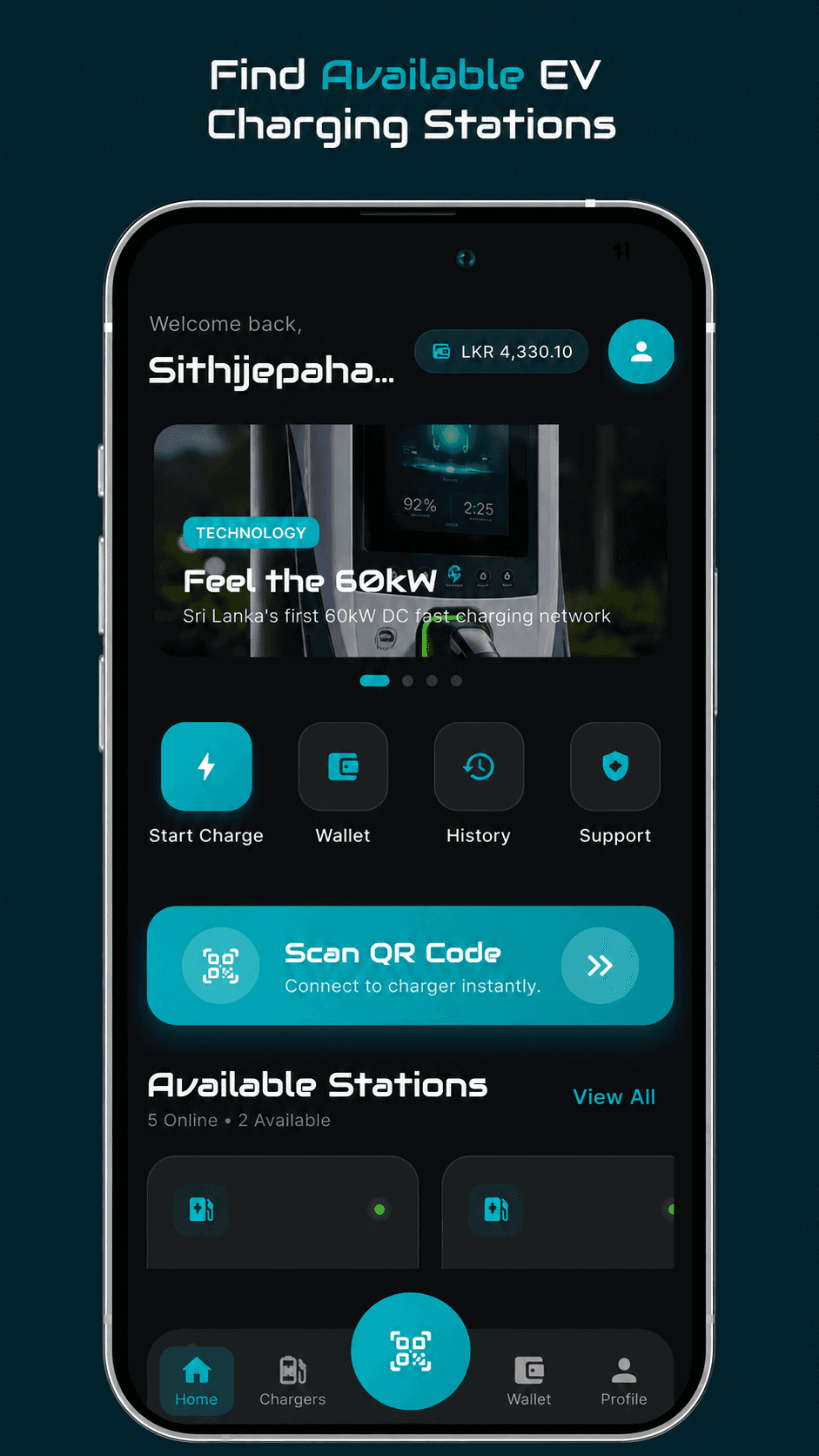
Home — wallet balance, one-tap QR scan and live station availability.
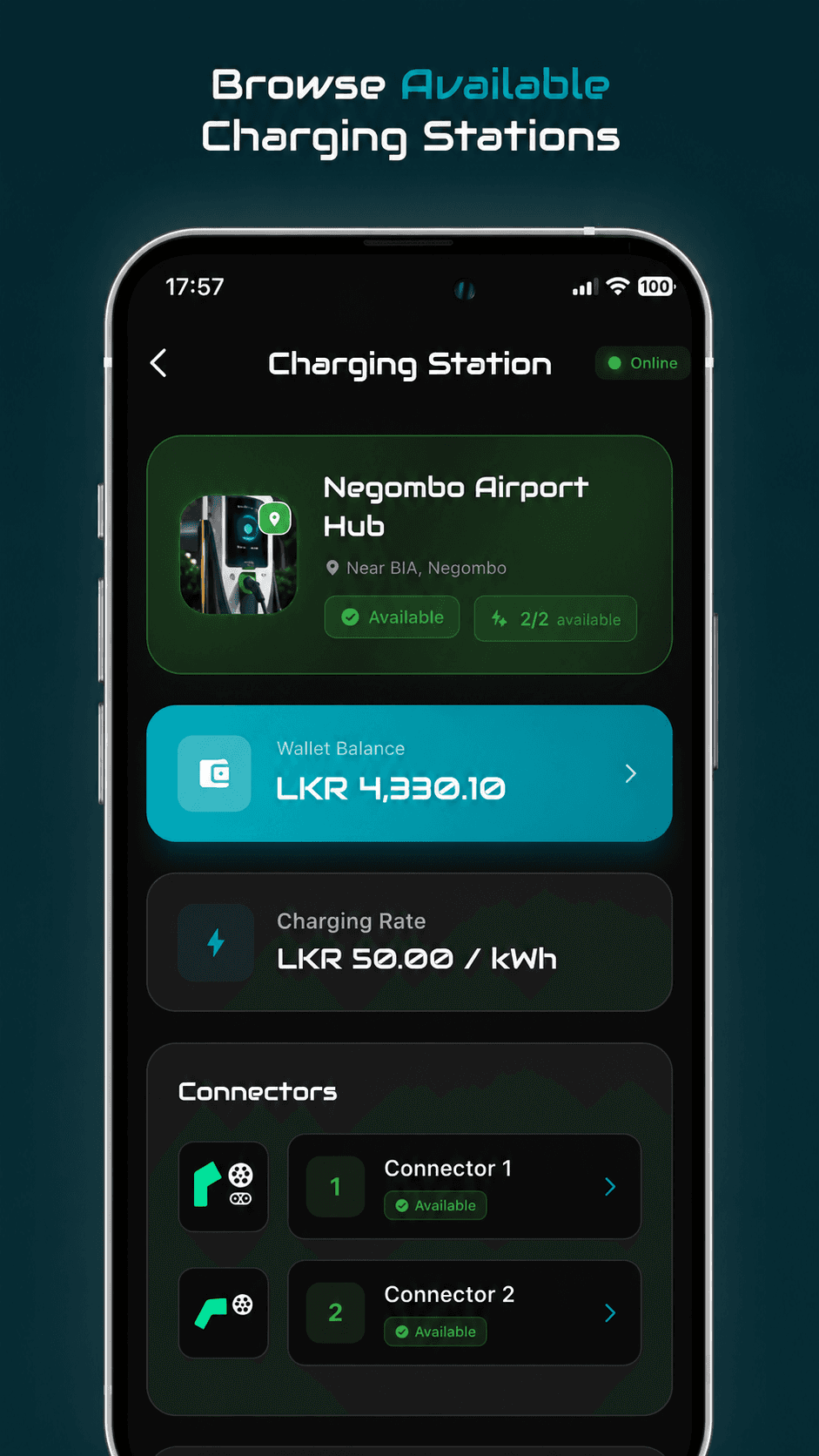
Station detail — connector-level status, tariff and wallet balance before commitment.
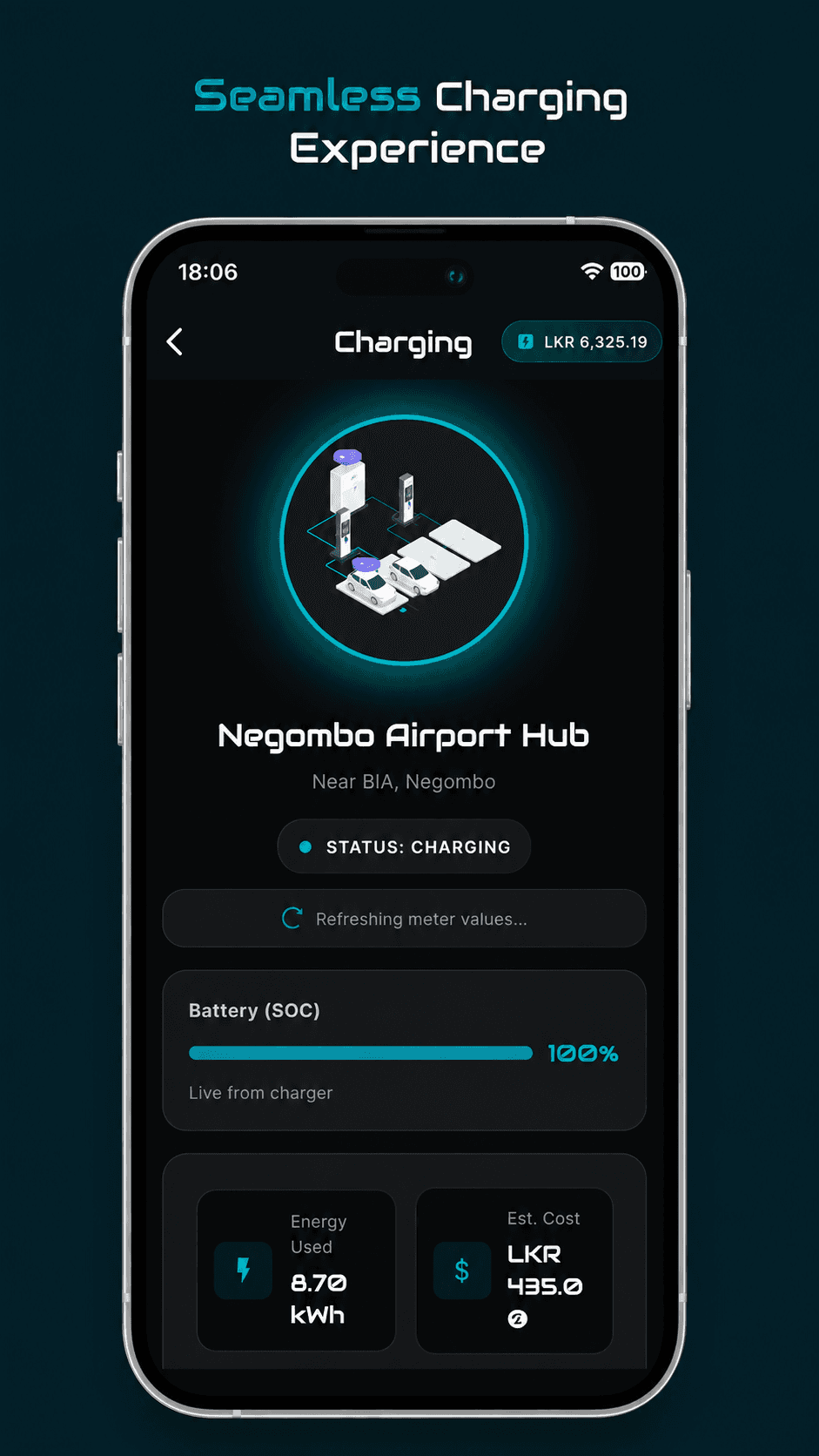
Live session — battery SOC, energy delivered and running cost, refreshed from the charger.
Eleven stages, one accountable session.
Stage
Before
Know where to charge
Clarity
Stage
Selection
Choose confidently
Assurance
Stage
Travel
Reach station
Continuity
Stage
Identification
Use correct charger
Safety
Stage
Preparation
Confirm affordability
Financial control
Stage
Activation
Begin charging
Control
Stage
Handshake
Understand delay
Transparency
Stage
Charging
Monitor session
Confidence
Stage
Stop
End safely
Safety
Stage
Settlement
Know final cost
Trust
Stage
Post-Use
Retain evidence
Accountability
Charging Session Lifecycle — Explicit States, Not a Boolean
Exception States
A ledger, not a balance number.
Financial state is calculated from immutable ledger entries, and no admin can silently rewrite financial history — every entry carries a unique reference, timestamp, reason, actor and related session ID.
Potential Harms Designed Against
Payment captured without charging
Incorrect wallet deduction
Duplicate charging transaction
Wrong charger remotely activated
User unable to stop
Fraudulent QR replacement
Manipulation of tariff
Unauthorized admin access
QR Trust Model
Scan QR
Send opaque code to LankaEvPlus backend
Backend resolves it against a trusted registry
Backend returns station, connector and current status
User confirms physical identifiers
Start authorization continues
Raw QR fields are never trusted directly — a malicious person could replace or alter them.
Ledger Entry Types
Admin Role Design — No Single Unrestricted Role
Station Operator
View assigned chargers, inspect status/sessions, report maintenance
Operations Administrator
Manage stations, investigate faults, remote start/stop under policy
Finance Administrator
View payments, reconcile transactions, process authorized refunds
Support Agent
View session context, create cases — no financial-adjustment authority
Super Administrator
Manage organizations, platform policy, approve sensitive actions, audit logs
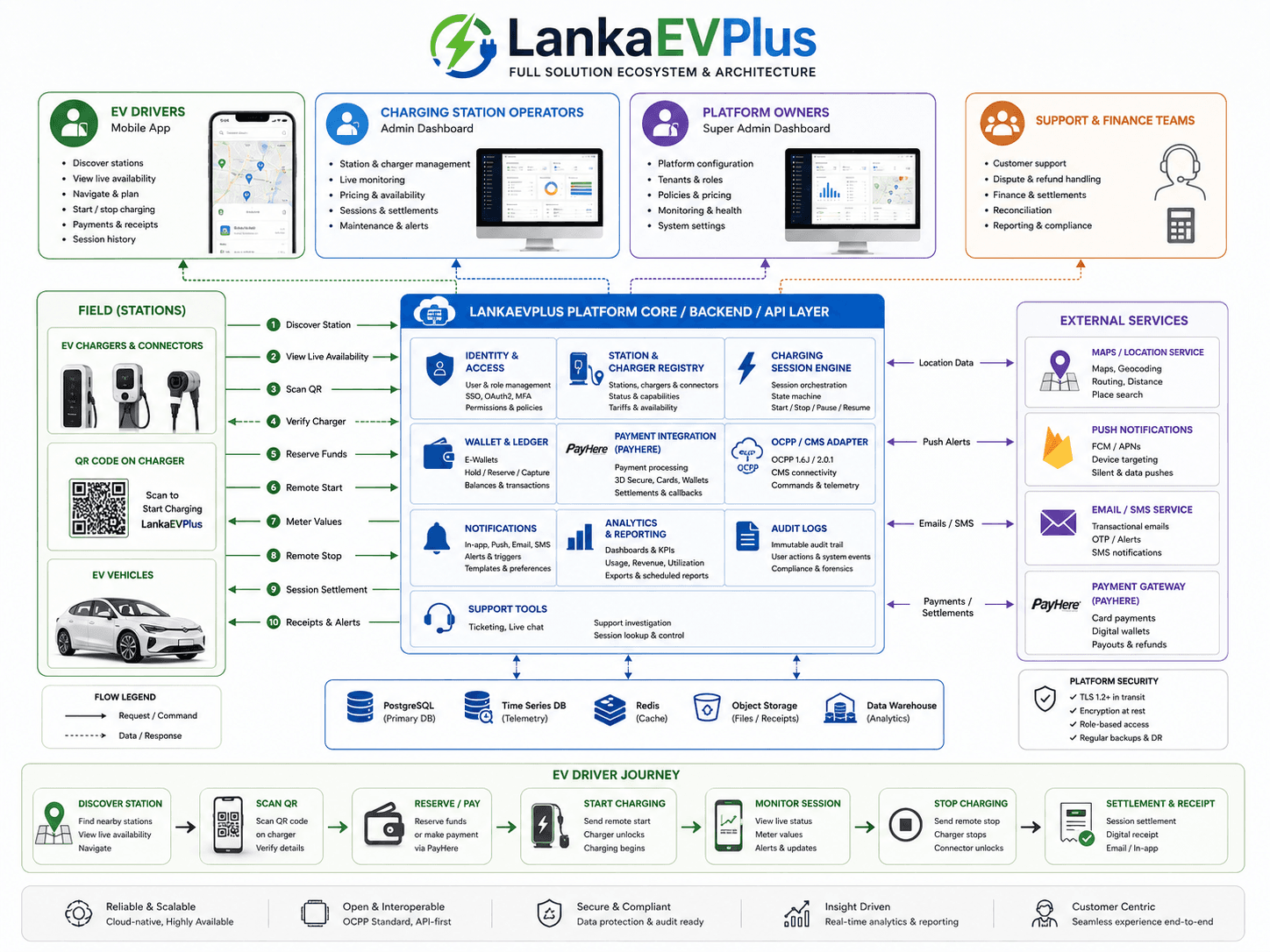
Modular monolith, hexagonal boundaries, event-driven.
One deployment with strict internal modules avoids premature microservice complexity, while ports and adapters protect the core charging domain from dependency on any one CMS vendor (EVSaaS, Z-Box) or payment provider.
Required Patterns
Source-of-Truth Strategy
User identity
LankaEvPlus identity database
Wallet balance
LankaEvPlus financial ledger
Payment gateway result
Verified PayHere webhook + reconciliation
Connector status
Latest confirmed CMS event
Energy delivered
Charger meter values
Final customer charge
LankaEvPlus tariff calculation using validated meter data
Usage-based revenue, never at safety's expense.
Essential safety, privacy and dispute access must never become paid premium features — revenue comes from energy usage, fleet/corporate accounts and platform services, not from withholding trust.
For EV Drivers
Dependable charger discovery
Clear price and availability
Simple QR activation
PayHere-enabled funding
Live charging visibility
Transparent settlement
One charging history
For Operators
Charger and session visibility
Revenue and payment control
Remote operational tools
User and fleet management
Fault monitoring
Audit and reporting
Energy charge per kWh
Primary usage-based revenue
Idle fee after completion
Encourages connector turnover
Fleet subscriptions
Corporate monthly invoicing
Site-partner revenue share
Aligns host-location incentives
Platform management fee
White-label operator platform
Five prototype levels before public rollout.
Prototype Levels
1. Experience Prototype
Clickable mobile flows for onboarding through failure recovery — test comprehension and confidence.
2. Mock API Prototype
Mock backend simulating station status, remote-start, meter updates and webhooks — build ahead of vendor APIs.
3. Virtual Charger Integration
OCPP 1.6 virtual charger simulating BootNotification, StartTransaction, MeterValues and faults.
4. Controlled Hardware Pilot
One charger, test vehicles, limited users, small-value payments, on-site support.
5. Limited Public Pilot
A small station group, measuring start rate, failures, support contacts and settlement accuracy.
Success Metrics
QR identification success
≥ 99%Valid start-request processing
≥ 98%Duplicate financial debit
0Payment-to-session automatic match
≥ 99.5%Active-session recovery after app restart
100%Critical admin actions audited
100%Delivery Roadmap
Decisions made deliberately, risks named honestly.
ADR-001
Mobile app does not communicate directly with chargers
Protect credentials, enforce business rules, reconcile payments and maintain audit history.
ADR-002
LankaEvPlus does not treat the CMS as its user backend
Users, wallets, payments, pricing and support remain in the LankaEvPlus domain.
ADR-003
Wallet is ledger-based
Auditability, dispute resolution, duplicate prevention and reconciliation.
ADR-004
Charging is implemented as a state machine
Real charging includes payment, remote command, connection, transfer, stop and settlement states.
ADR-005
CMS integration uses ports and adapters
Vendor uncertainty and future interoperability.
ADR-006
Initial deployment uses a modular monolith
Faster delivery, easier transactions and lower operational cost.
| Risk | Mitigation |
|---|---|
| Payment succeeds but start fails | Reserve/release model and automatic reconciliation |
| Charger status becomes stale | Timestamp, heartbeat threshold and offline state |
| Duplicate start/stop | Idempotency and state transition validation |
| App closes during charging | Backend-owned session and recovery endpoint |
| CMS outage | Circuit breaker, explicit outage mode and support process |
| QR tampering | Server-side opaque QR verification |
| Admin misuse | RBAC, approval, MFA and audit |
| Vendor lock-in | Hexagonal adapter architecture |
Portfolio-Ready Closing
A scalable foundation for electric mobility.
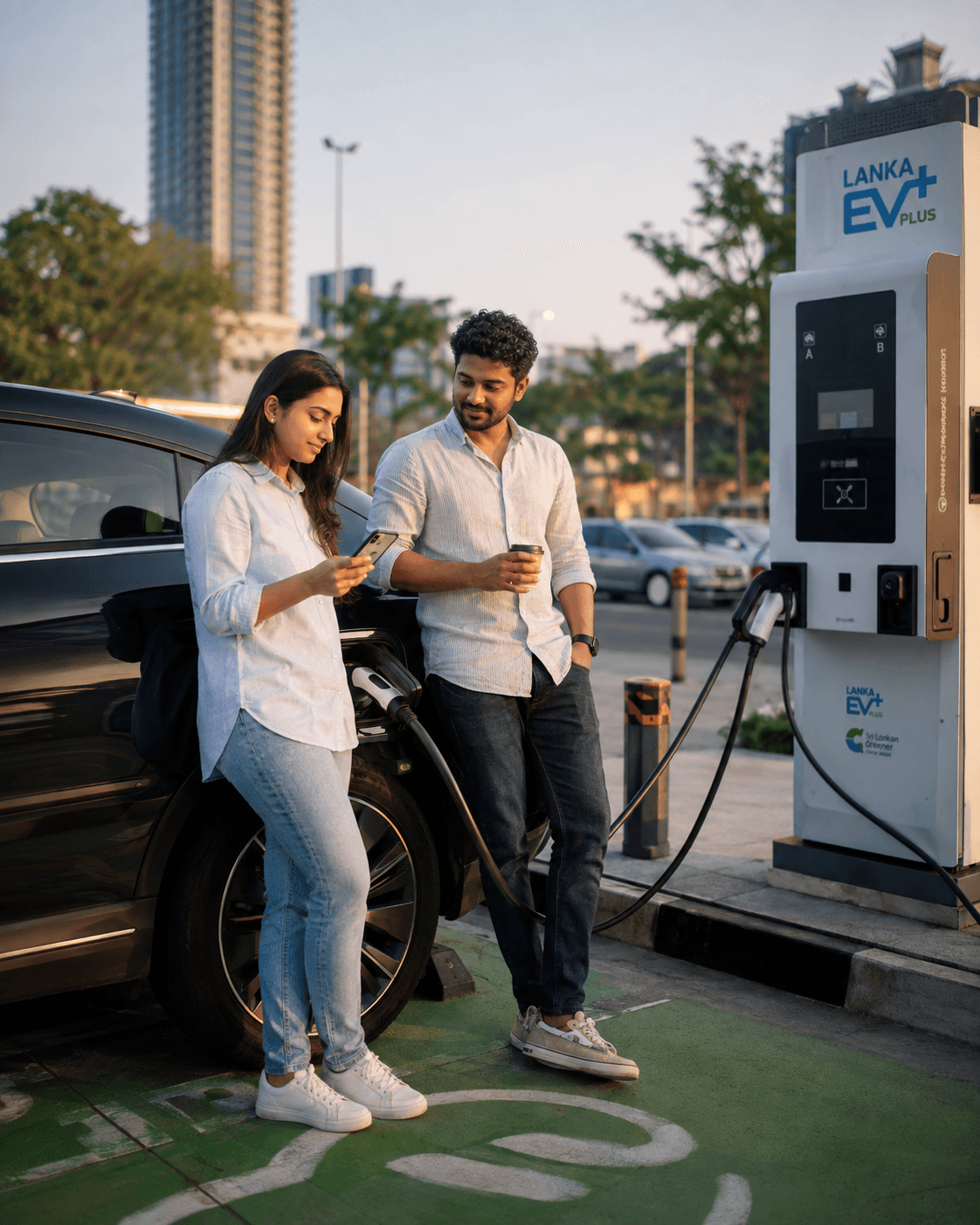
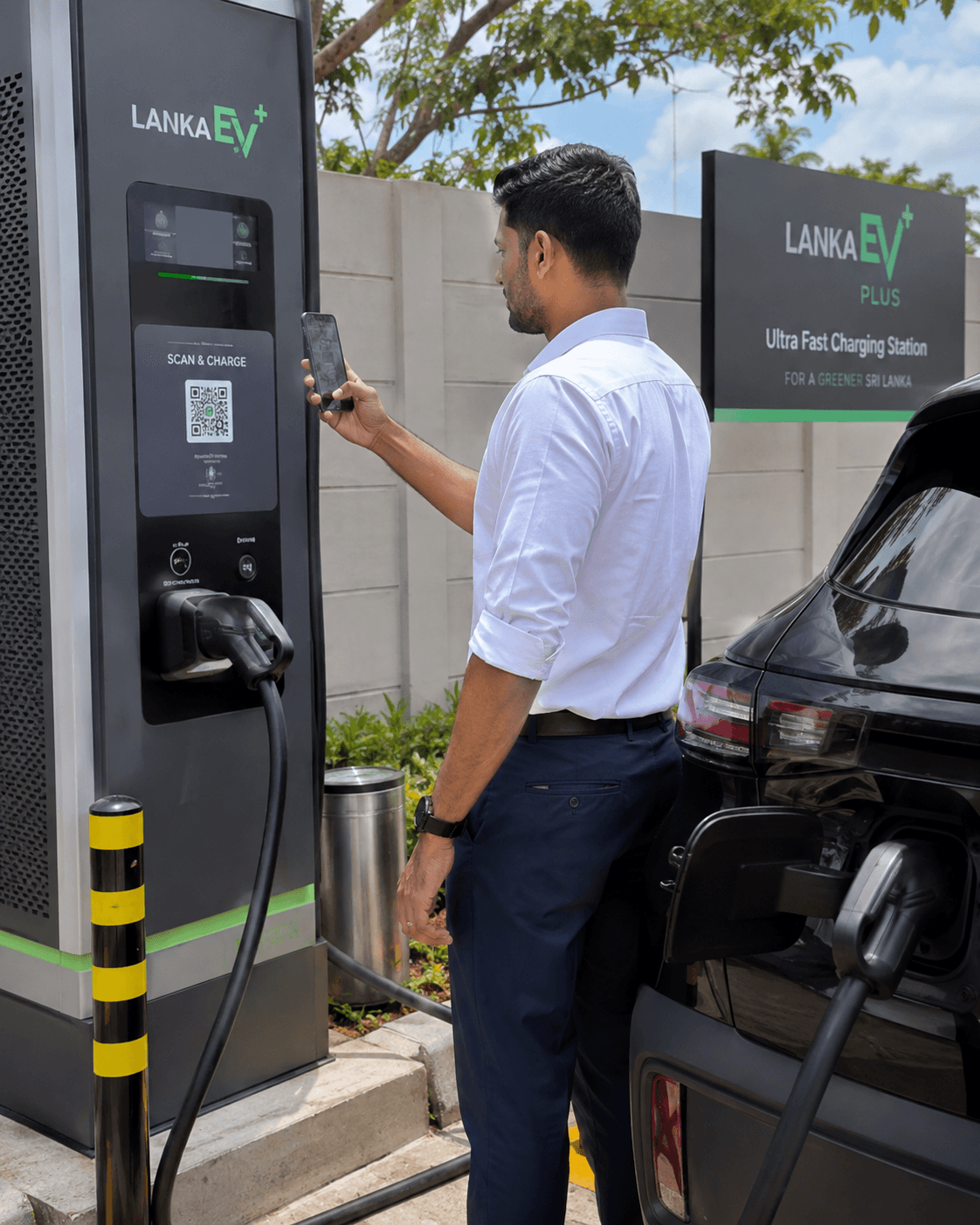
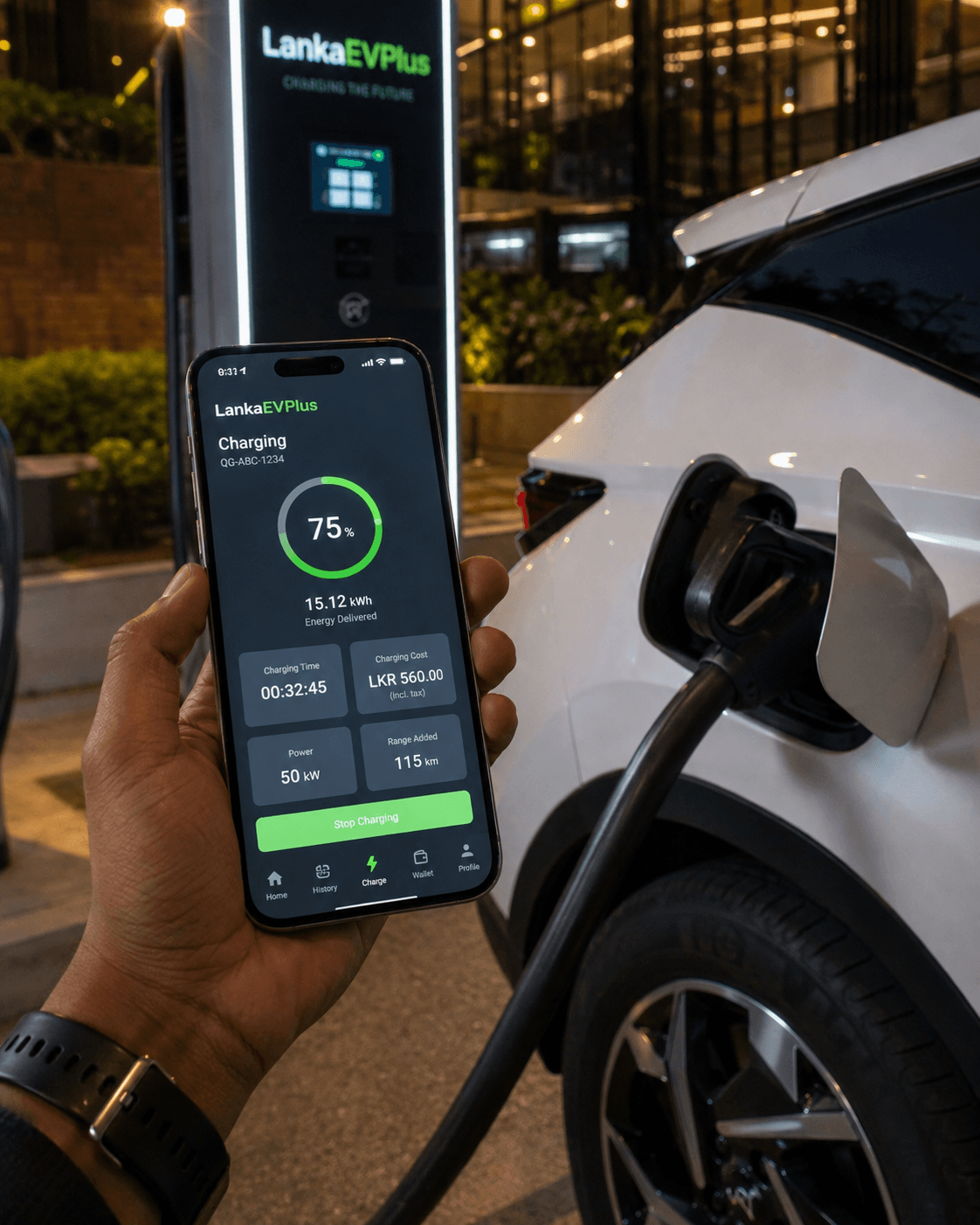
LankaEvPlus demonstrates my ability to approach a software project as a complete consumer and operational system rather than beginning with screens or features. I modelled the charging environment, stakeholders and behavioural uncertainty EV drivers face, identified the Market Gravity Point, and translated that deprivation into a value space built on reliability, transparency, safety, financial assurance and user control.
Architecturally, I designed LankaEvPlus as a modular, vendor-independent ecosystem — a Flutter mobile app, operator and super-admin platforms, a secure backend, PayHere and an OCPP-based Central Management System — protected by ports and adapters, state-based charging workflows, idempotency, ledger-based finance and audit controls.
Apex Value
Confident and Continuous Electric Mobility — find, connect, pay, charge and continue with confidence.